



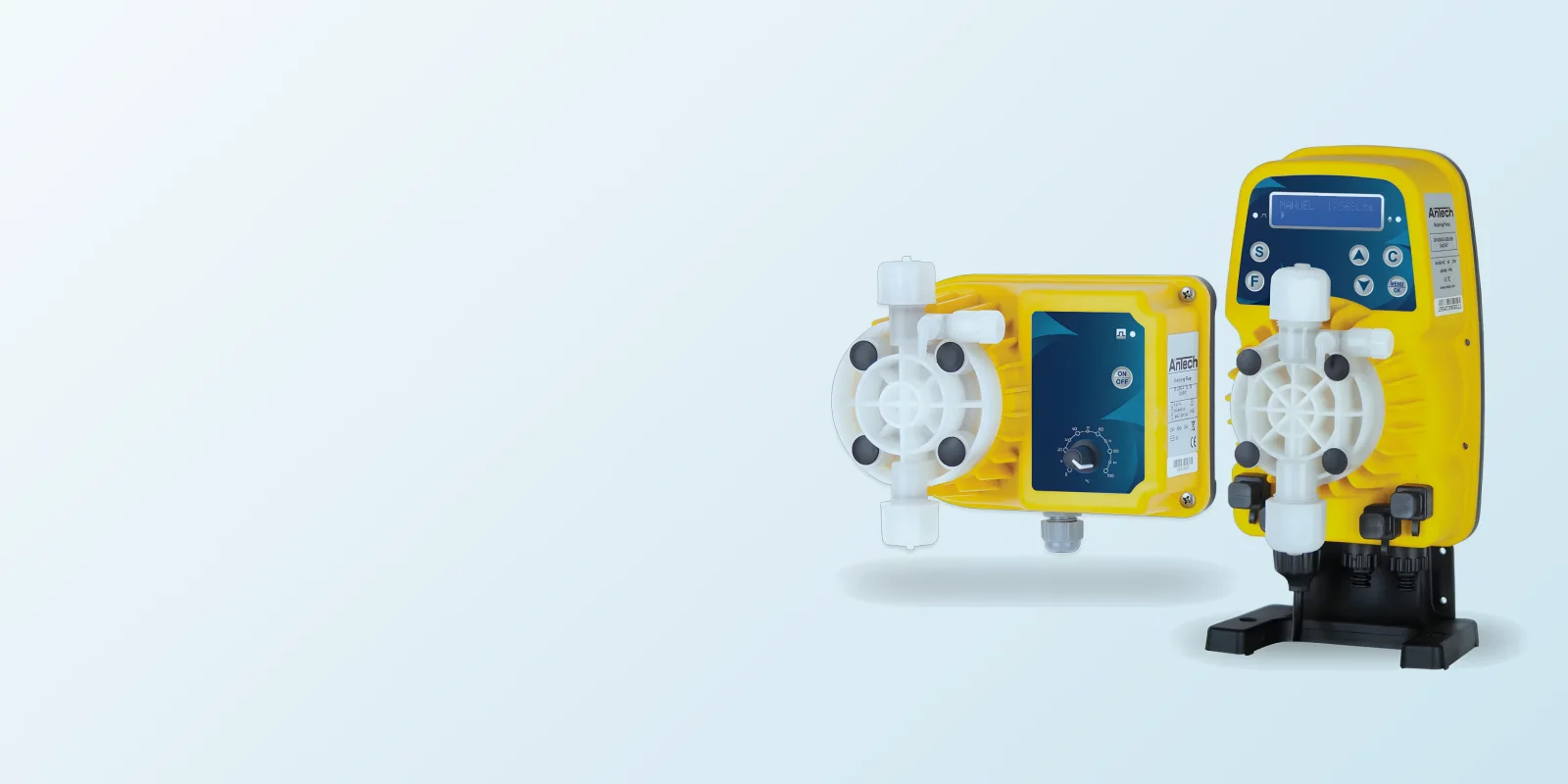
Chlorine Dosing Pump
Chlorine and chemical dosing pumps backed by AQUABELLA, the official AnTech distributor: from analog models to systems with free chlorine measurement.
About Us
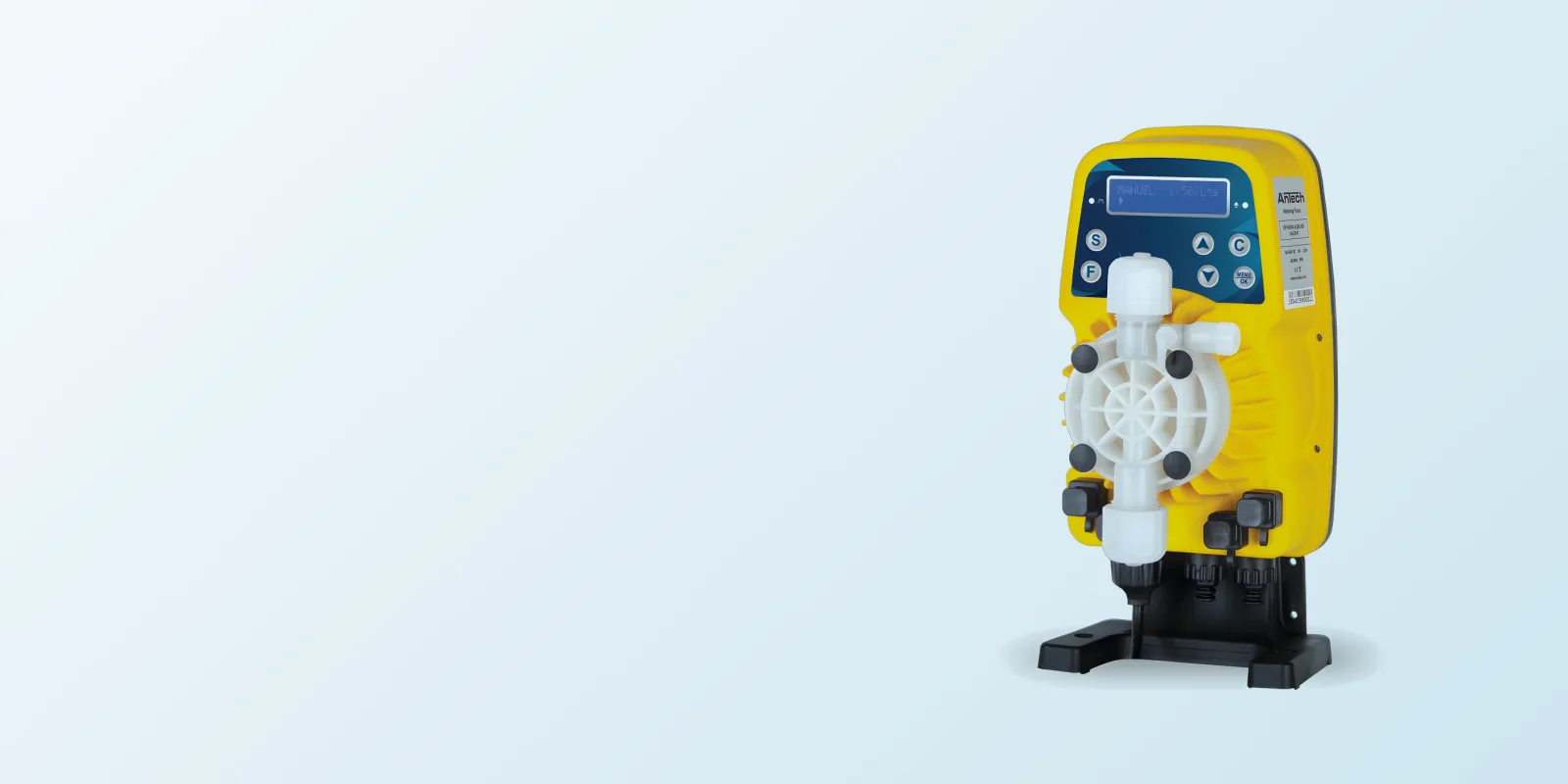
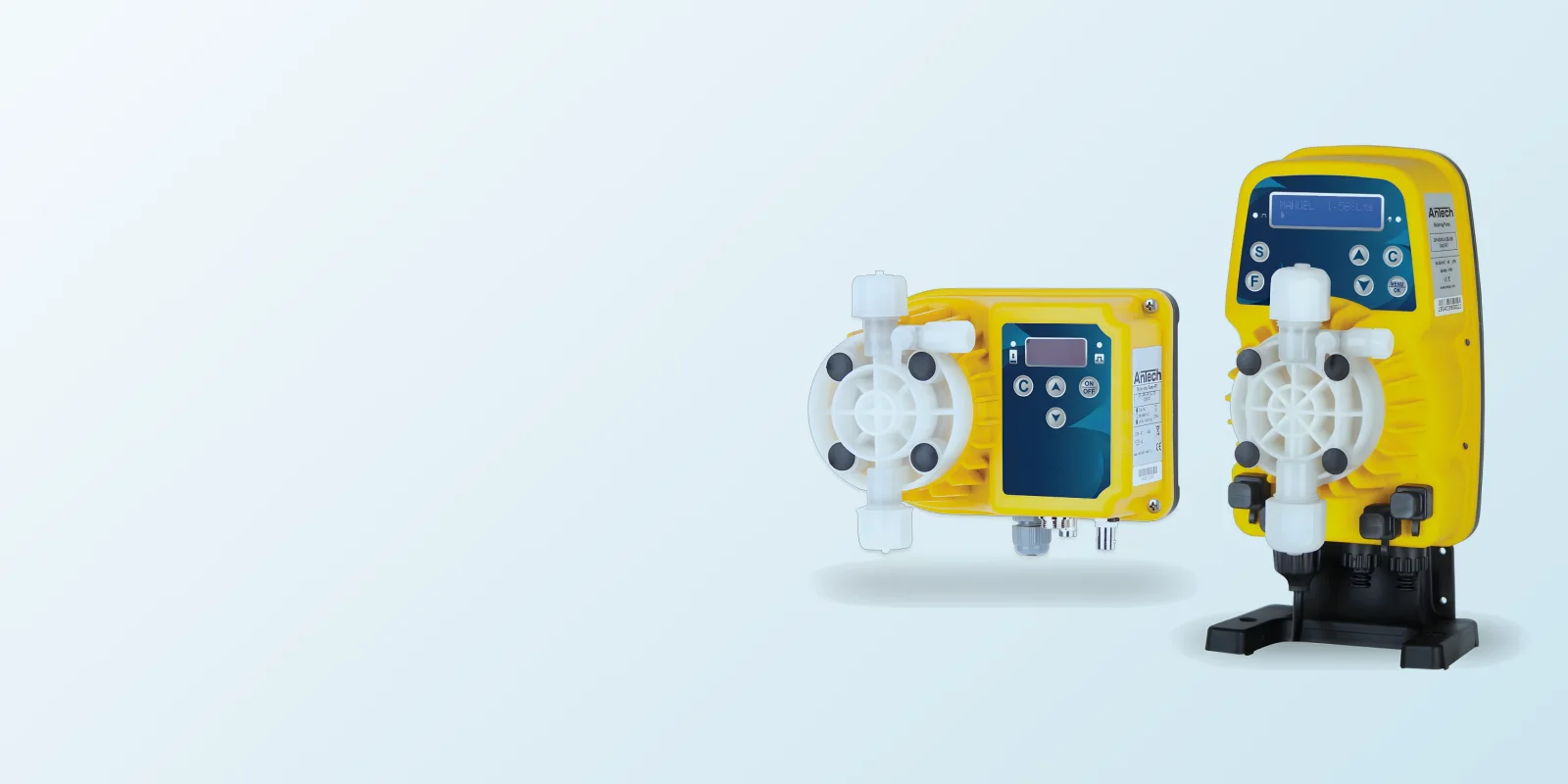
AQUABELLA is the official distributor in Türkiye of AnTech dosing pumps and measuring and control instruments. When selecting a pump for dosing chlorine, pH adjusters and other chemicals, we take into account the flow rate of the plant, the line pressure and the control requirements.
You can review the technical data, current prices and spare parts of every product with clear information, and contact us for installation, maintenance and service.
Our Solutions
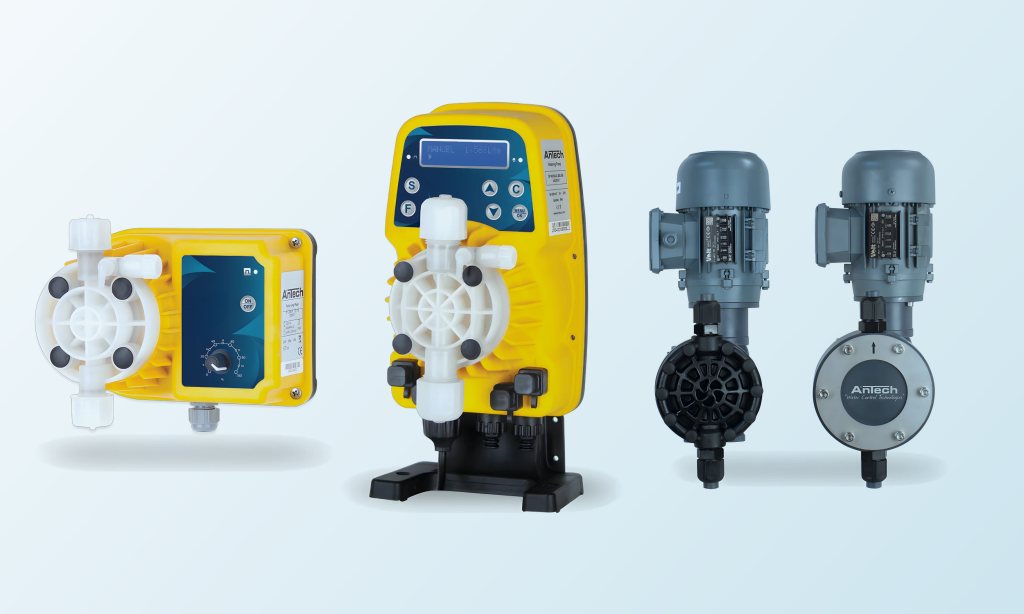
Explore the AnTech dosing pump series for chlorination and chemical dosing.
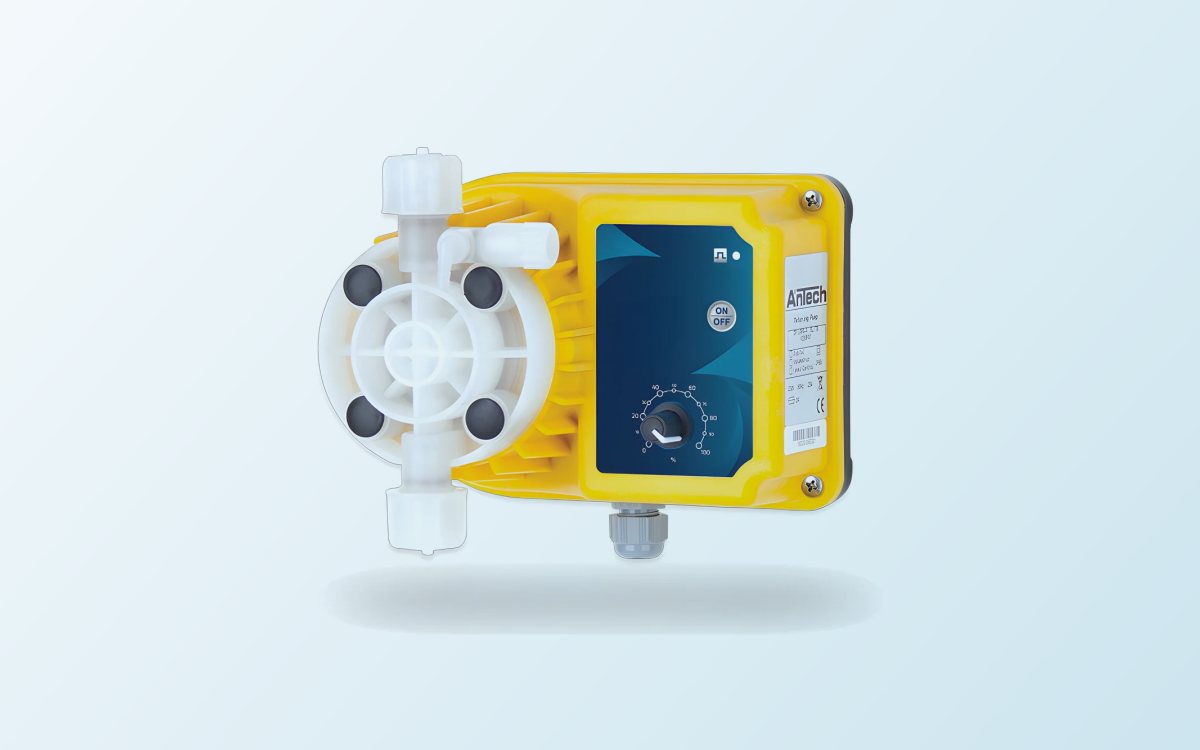
Chlorine Dosing Pump Models
Compare analog, digital, pH/ORP and free chlorine measuring AnTech models by flow rate, pressure and control type.
Learn More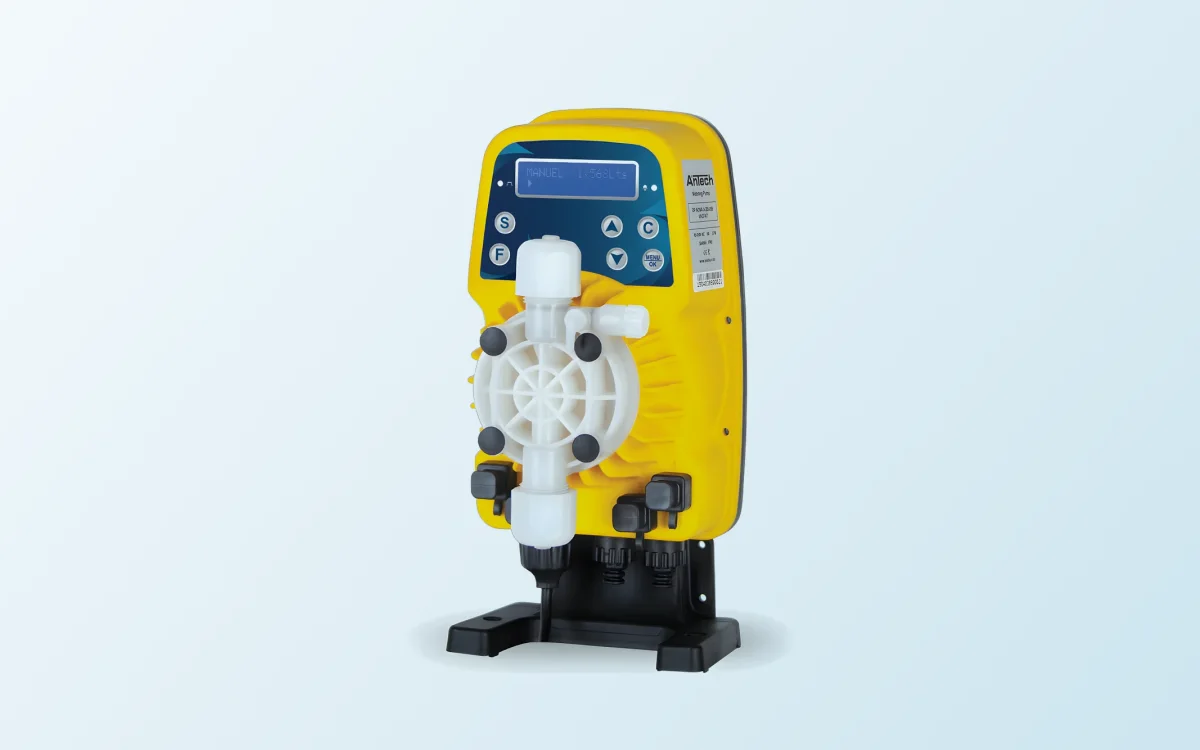
Chlorine Dosing Pump Prices
Current prices of all AnTech dosing pumps in USD, excl. VAT; prices are updated daily with the exchange rate.
Learn More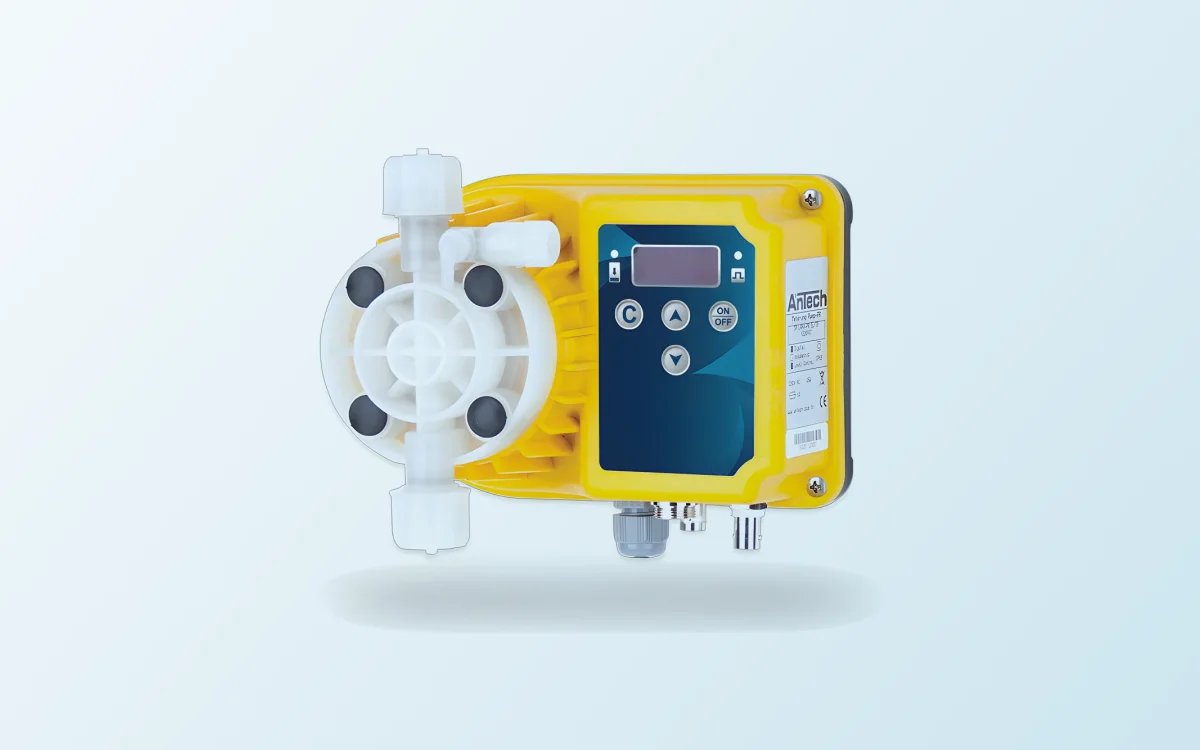
Chlorine Dosing Calculator
Calculate the pump flow you need from the water flow rate, target chlorine level and solution concentration.
Learn More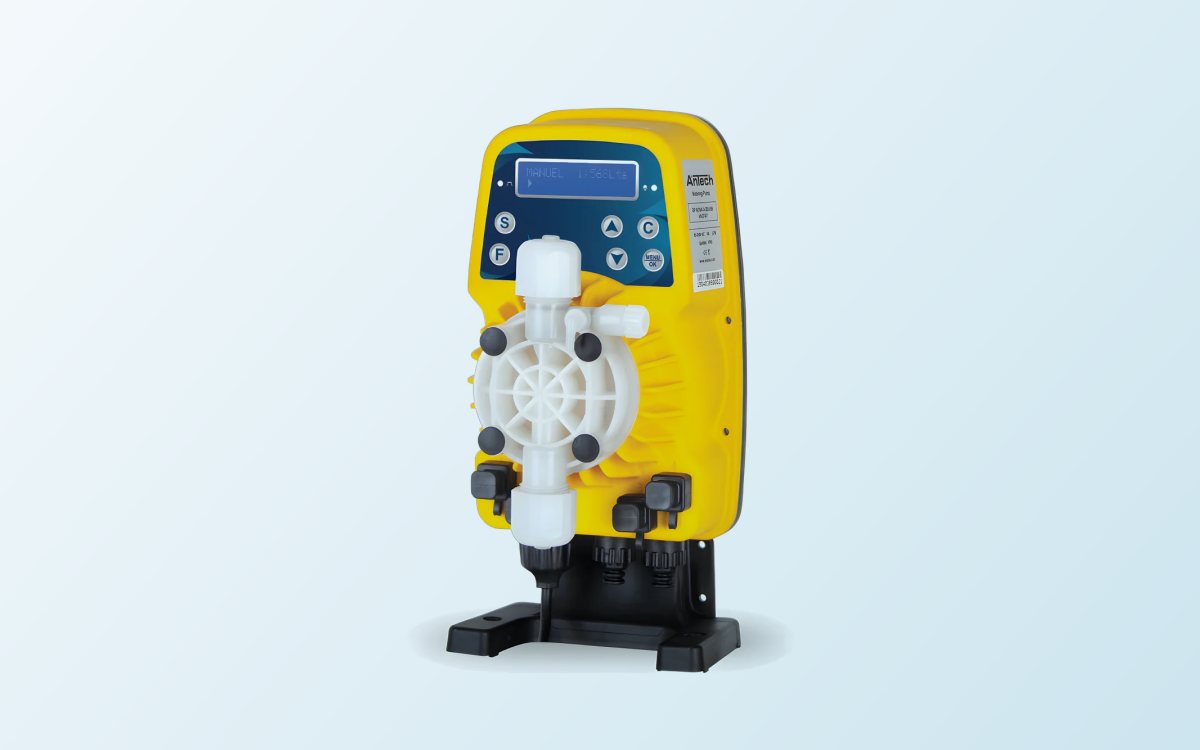
Pool Chlorine Dosing Pump
Choosing the right pump and measuring instrument for chlorine and pH dosing according to pool volume.
Learn More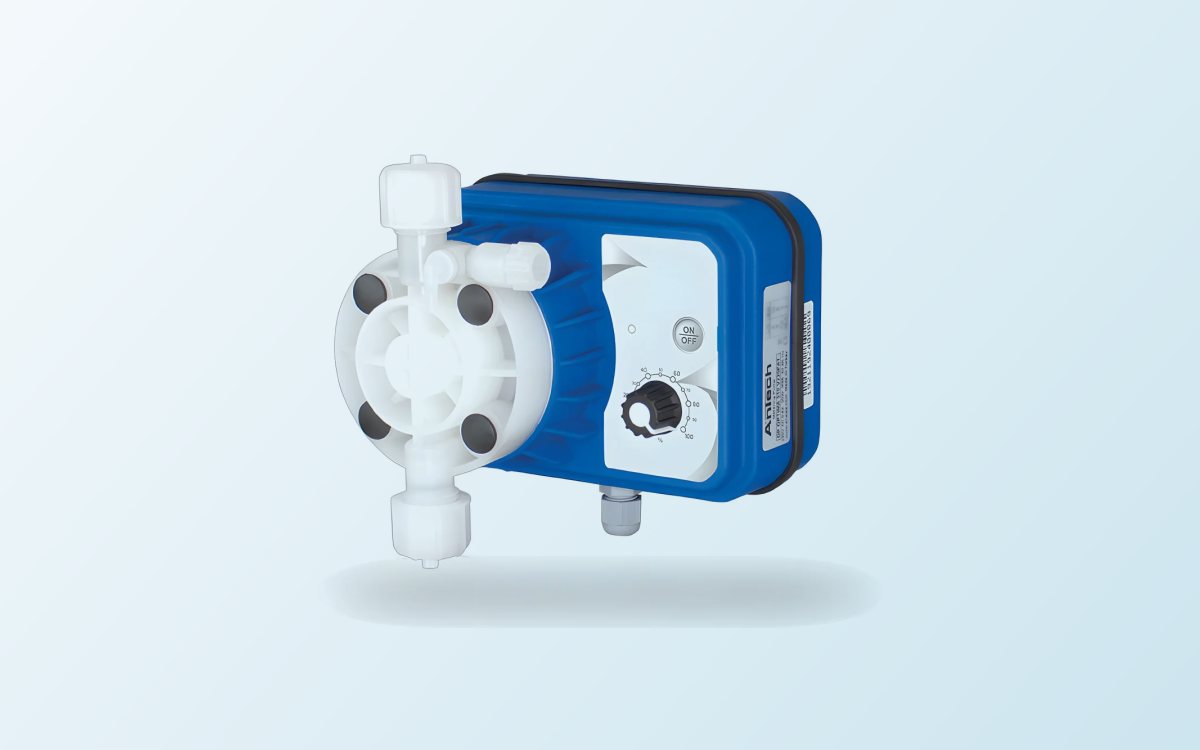
pH Dosing Pump
pH-controlled and automatic pH dosing pumps for pools, tanks and process water.
Learn More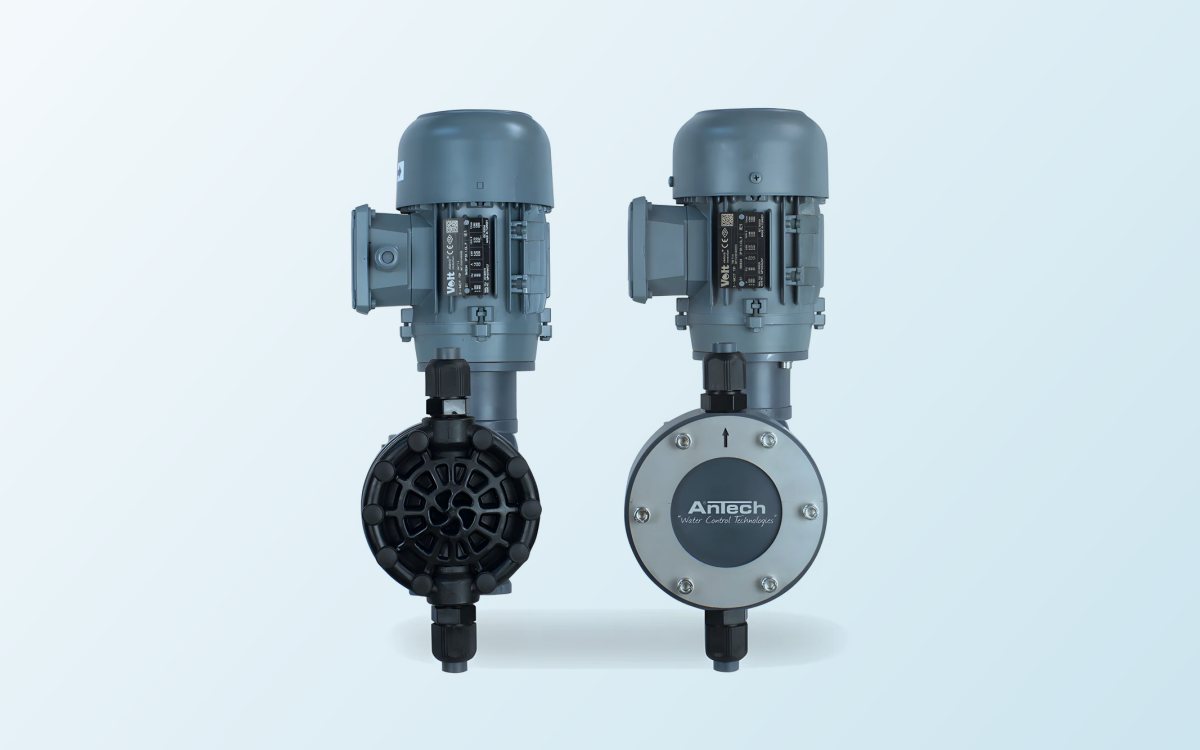
Chlorine Dosing Pump Service
Installation, periodic maintenance, calibration, repair and replacement with genuine spare parts.
Learn MoreDosing Pump Series
Explore the AnTech dosing pump series and measuring models by control type and capacity.
 Application
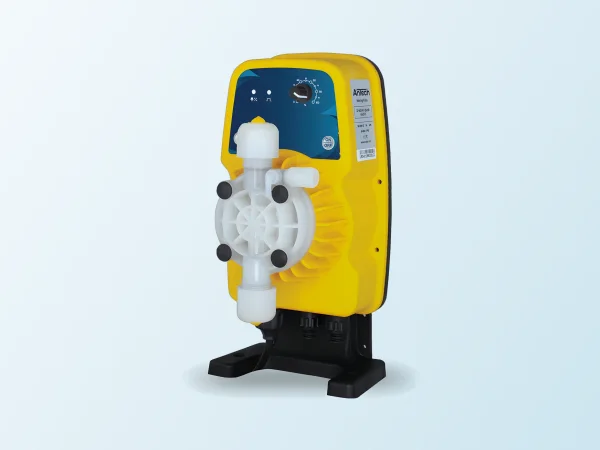
AnTech Nova Series
Analog, digital, pH/ORP and free chlorine measuring models; 3.5–25 L/h, 95–260 V AC.
Learn More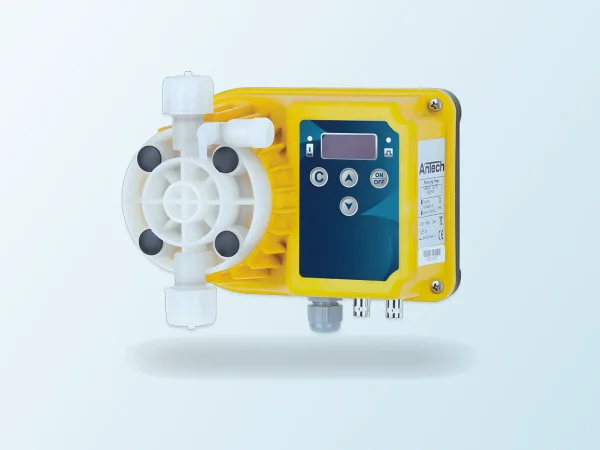 Application
AnTech Lara Series
Compact, with PVDF pump head; analog, level-controlled, timer, volumetric and pH/ORP models.
Learn More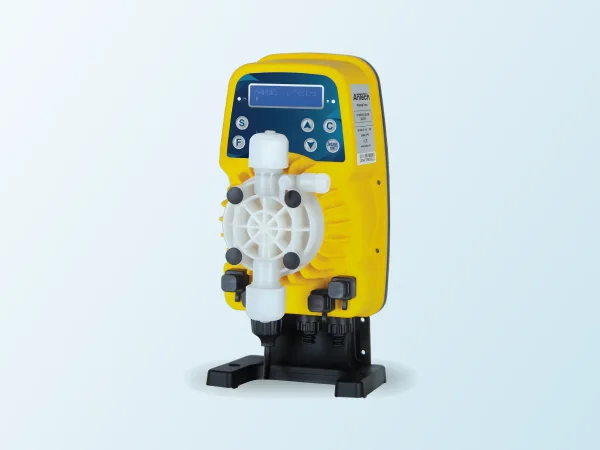 Application
Dosing Pumps with Chlorine Measurement
Nova DMİA models that measure free chlorine and adjust the dose automatically.
Learn More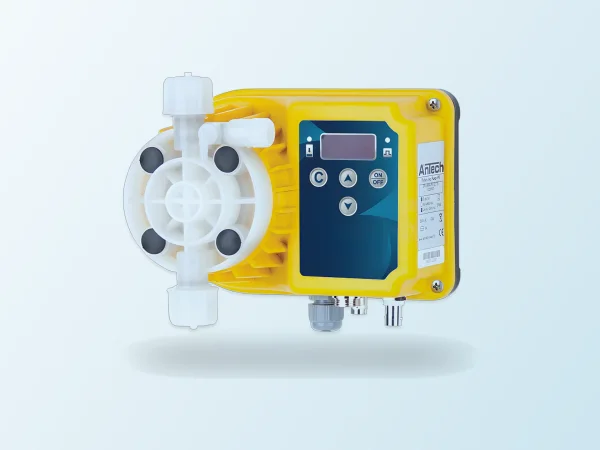 Application
pH and ORP Controlled Pumps
Nova DMPR and Lara PR models that dose automatically based on pH or ORP measurement.
Learn More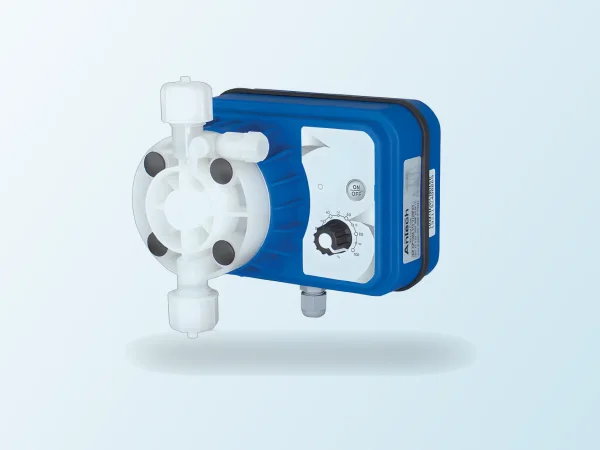 Application
AnTech Optima Series
Analog Optima with a flexible flow–pressure curve; Viton and Teflon O-ring options.
Learn More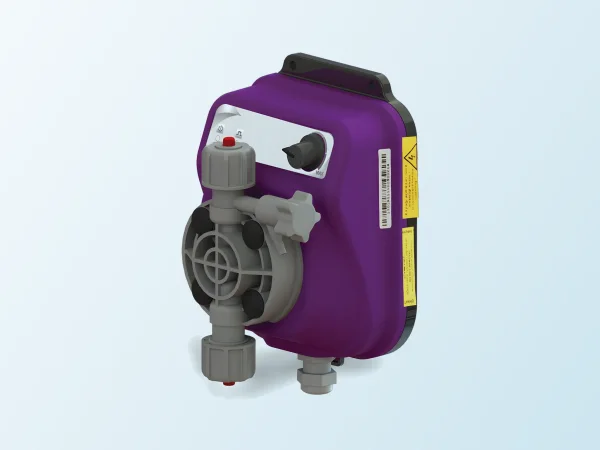 Application
AnTech Nano Series
The lightest and most energy-efficient analog pump; for small tanks and well systems.
Learn MoreWhy AQUABELLA?
Needs-Based Selection
Choose the right model by flow rate, pressure and control type.
Capacity Planning
Calculate the pump flow you need for your target chlorine level.
Transparent Technical Data
Compare product specifications with clear information.
Maintenance Planning
Plan maintenance in advance with genuine spare parts and service.
Short answer: A chlorine dosing pump is a pump that injects a liquid chlorine solution (usually sodium hypochlorite) into water in a set quantity and at regular intervals. It is used to disinfect water in drinking water tanks, well water systems, swimming pools and industrial plants. The right pump is chosen by looking at the water flow rate, the line pressure at the injection point, and whether dosing will be set manually, controlled by a water meter or controlled by measurement. As the official distributor of AnTech in Türkiye, AQUABELLA offers 38 pumps in the Nova, Lara, Optima and Nano series, with prices shown in USD excluding VAT. Shipping is free within Türkiye; international shipping is quoted per order.
On this page we summarise how a chlorine pump works, which type is used in which kind of installation, how capacity is calculated and what determines the price. To see all series side by side with their technical data, visit our chlorine dosing pump models page.
What Is a Chlorine Dosing Pump and What Does It Do?
A chlorine dosing pump is a positive displacement pump that draws chlorine solution from a tank and delivers a metered quantity into a water line, storage tank or pool circuit. Its job is to add chlorine to the water at the same rate every hour, so that microorganisms are inactivated and the water stays disinfected throughout distribution.
Pouring chlorine by hand or dripping it from a drum means the water gets too much chlorine one day and too little the next. Too much chlorine causes odour and taste problems; too little leads to inadequate disinfection. Chlorine dosing pumps remove these fluctuations: the setting is made once, and the pump delivers the same quantity every hour. Advanced models automatically adjust the dose according to a signal from a water meter or to the measured chlorine, pH or ORP value of the water.
These pumps are not used for chlorine alone. With suitable materials they can also dose other liquid chemicals such as pH correctors, flocculants or corrosion inhibitors. That is why their general name is “dosing pump”; when used for chlorine dosing they are called a “chlorine pump” or “chlorine dosing pump”.
How Does a Chlorine Pump Work?
A chlorine pump works by drawing in and pushing out a small, fixed volume of chemical with each movement of a diaphragm or a hose. In diaphragm pumps this movement takes place inside the pump head; check valves on the suction and discharge sides of the head ensure that the liquid flows only from the tank towards the line. There are three basic operating principles.
Electromagnetic (solenoid) diaphragm pump
An electronic circuit sends short electrical pulses to the electromagnet inside the pump. With each pulse the magnet pushes the diaphragm forward and the chemical in the head leaves through the discharge check valve into the line; as the diaphragm returns, the suction check valve opens and fresh chemical is drawn from the tank. This movement is called a stroke, and the flow rate is set by the number of strokes per minute. For example, the AnTech Lara A 5 L/h 7 Bar delivers 0.694 ml per stroke at 120 strokes per minute, which comes to roughly 5 litres per hour. Thanks to their compact design and easy electronic control, these pumps are widely used for small and medium-flow chlorination.
Mechanical (motor-driven) diaphragm pump
An electric motor moves the diaphragm back and forth continuously through a mechanical drive. In AnTech’s EMD series in this group, capacity is adjusted manually between 0–100%; it can also be adjusted with a motor drive that accepts a 4–20 mA signal input. Because their flow rate reaches hundreds of litres per hour, these pumps are preferred for large applications such as municipal and industrial plants.
Peristaltic pump
The chemical passes through a flexible hose; rotating rollers squeeze the hose and push the liquid forward. Inside the pump the chemical only comes into contact with the hose. Because sodium hypochlorite releases gas over time, diaphragm pumps can suffer from gas locking; peristaltic pumps have an advantage against this problem. On the other hand, their back pressure ratings are low: a maximum of 3 bar in AnTech’s Aspendose series.
Diaphragm, stroke and check valve
- Diaphragm: The flexible membrane that pushes the chemical. In AnTech electromagnetic pumps it is made of PTFE and resists corrosive chemicals.
- Stroke: One forward-and-back movement of the diaphragm. The volume per stroke multiplied by the number of strokes per minute gives the pump’s flow rate. The volume per stroke depends on back pressure; it increases as pressure falls.
- Check valve: A ball valve that allows liquid to pass in one direction only. It is located on the suction and discharge sides of the head; in AnTech electromagnetic pumps the balls are zirconia. Crystallisation of chlorine solution affects these parts most.
Where Are Chlorine Dosing Pumps Used?
Chlorine dosing pumps are used wherever water needs to be disinfected: drinking and domestic water tanks, well water, swimming pools, industrial process and cooling water, and wastewater outlets. The pump’s capacity and control type vary with the application.
Drinking water tanks and mains inlets
At a tank inlet or on a mains line, chlorine has to be added to the water continuously and evenly. If the flow rate is constant, an analogue pump is sufficient. If the flow rate varies during the day, a digital model that works with a water meter, such as the AnTech Nova D 10 L/h 10 Bar, keeps the amount of chemical proportional to the water passing through. If free chlorine has to stay within a set range, the AnTech Nova DMİA 10 L/h 10 Bar measures the free chlorine level of the water with a sensor and adjusts the dose accordingly. The target chlorine level is set by the facility’s responsible engineer in line with the applicable regulations.
Well water
In homes, villas, residential complexes and workplaces, well water is often supplied through a booster pump set and a storage tank. In these systems the flow rate is low and usually constant; simple analogue pumps such as the AnTech Lara A 2 L/h 10 Bar or the AnTech Nano A 2 L/h 10 Bar are sufficient. If you want to know when the chemical tank is running low, you can choose the level-controlled AnTech Lara APS 5 L/h 7 Bar. Wiring the dosing pump to run together with the well pump or booster set prevents chlorine from building up in the line while no water is flowing.
Swimming pools
The chlorine demand of pool water changes during the day with bather load, sunlight and temperature. That is why pumps that adjust the dose according to measurement stand out for pools: the AnTech Lara PR 5 L/h 7 Bar and the AnTech Nova DMPR 10 L/h 10 Bar dose chlorine based on ORP measurement and pH corrector based on pH measurement. Because the effectiveness of chlorine depends on the pH of the water, pools usually use two pumps together, one for chlorine and one for pH. For selection by pool volume, see our pool chlorine dosing pump page, and for the pH side, our pH dosing pump page.
Industry, food and cooling water
In facilities such as food and beverage plants, hotels and hospitals, monitoring the chlorine level of process and domestic water is important. Here, pumps with free chlorine measurement and models that send the measured value to the automation system through a 4–20 mA output are the usual choice. In cooling towers and high-flow process lines, mechanical diaphragm pumps that can reach hundreds of litres per hour are used.
Wastewater
Chlorine dosing pumps are also used to disinfect treated wastewater before discharge. Because the flow in wastewater plants is large and variable, digital pumps that work with a water meter or a 4–20 mA signal, or high-flow mechanical pumps, are chosen. In this application, choosing materials that withstand the chemical and the environment becomes even more important.
Chlorine Pump Types and Flow Ranges
Three types of pump are used for chlorine dosing, and the main difference between them is the flow rate and back pressure they can reach. The table summarises the three types using the values in the AnTech catalogue.
| Type | AnTech series | Flow range | Max. back pressure | Control options |
|---|---|---|---|---|
| Electromagnetic (solenoid) diaphragm | Nova, Lara, Optima, Nano | Nominal 2–25 L/h (up to 55 L/h at low pressure) | 5–20 bar | Analogue, level control, timer, volumetric, pH/ORP measurement, free chlorine measurement |
| Mechanical (motor-driven) diaphragm | EMD-P, EMD-M | 14–630 L/h (50 Hz) | 3–7 bar | Manual 0–100%; with a motor drive accepting 4–20 mA input |
| Peristaltic | Aspendose | 0.001–5.1 L/h (depending on model) | 0.5–3 bar | Analogue, digital volumetric, pH/ORP measurement |
We explain the operating principle, advantages and limitations of each type in detail in the types of dosing pump section of our models page. If you are considering a mechanical diaphragm or peristaltic pump, send us your installation’s flow rate and line pressure and we will work out the right model together.
Chlorine Dosing Pump Series: Nova, Lara, Optima and Nano
The electromagnetic models in the AnTech dosing pump family sold by AQUABELLA are grouped into four series, which differ in housing, power supply and the control types they offer. In all series the diaphragm is PTFE, the check valve balls are zirconia and the housing is rated IP65.
| Series | Control types | Capacities (flow · pressure) | Power supply | Number of models |
|---|---|---|---|---|
| AnTech Nova | A (analogue, level control), D (digital), DMPR (pH/ORP), DMİA (free chlorine) | 3.5 L/h · 20 bar; 10 L/h · 10 bar; 25 L/h · 5 bar | 95–260 V AC, auto-adapting | 12 |
| AnTech Lara | A (analogue), APS (level control), DS (timer), DMS (volumetric), PR (pH/ORP) | 2 L/h · 10 bar; 5 L/h · 7 bar; 10 L/h · 5 bar; 2 L/h · 20 bar | 230 V AC, 17 W | 20 |
| AnTech Optima | A (analogue); Viton or Teflon O-ring | 5 L/h · 10 bar; 2.5 L/h · 15 bar | 230 V AC, 20 W | 4 |
| AnTech Nano | A (analogue) | 2 L/h · 10 bar; 5 L/h · 5 bar | 230 V AC, 10 W | 2 |
Nova offers four control types in the same housing and adapts automatically to the mains voltage; with its 25 L/h model it has the highest flow rate of the four series. Analogue Nova A models (e.g. the AnTech Nova A 10 L/h 10 Bar) have two level inputs and 1/10 and 1/100 fine adjustment steps; digital Nova models have level, flow and PT100 inputs, plus ModBus RTU (RS485) communication with a separately sold module. Lara is the series with the widest model range: there are five control types, from the simplest model with an on/off button to the model with pH/ORP measurement. Optima is an analogue pump whose flow–pressure values are given in detail in the catalogue; the AnTech Optima A 5 L/h 10 Bar delivers 10 L/h at 1 bar. Nano, weighing 1.76 kg and drawing 10 W, is the lightest of the four series; it suits small tanks and tight spaces.
You can find all four series in the electromagnetic dosing pumps category, and the measurement-controlled models in the pH/ORP controlled dosing pumps and dosing pumps with chlorine measurement categories. All our products are listed in the dosing pumps category. In addition, the AnTech catalogue includes the mechanical diaphragm EMD-P and EMD-M series and the peristaltic Aspendose series; these are intended for special requirements such as high flow rates and gas-forming chemicals.
How to Choose the Right Chlorine Dosing Pump
Choosing the right pump requires five pieces of information: the hourly flow rate of the water to be chlorinated, the target chlorine dose, the concentration of the solution used, the line pressure at the injection point, and how dosing will be controlled. The first three determine the pump’s capacity; the last two determine the model.
1. Calculate the required flow rate
Pump flow rate (L/h) = Water flow rate (m³/h) × Target chlorine (mg/L) ÷ Active chlorine in the solution (g/L)
In the table the target chlorine is taken as 1 mg/L and two solutions are compared: sodium hypochlorite containing 120 g of active chlorine per litre, and the same product diluted to 10 g of active chlorine per litre. If the value on the label of your product is different, use that value in the calculation.
| Water flow rate | Active chlorine required | Pump flow rate (120 g/L solution) | Pump flow rate (10 g/L solution) |
|---|---|---|---|
| 5 m³/h | 5 g/h | 0.04 L/h (approx. 42 ml/h) | 0.5 L/h |
| 10 m³/h | 10 g/h | 0.08 L/h (approx. 83 ml/h) | 1 L/h |
| 25 m³/h | 25 g/h | 0.21 L/h | 2.5 L/h |
| 50 m³/h | 50 g/h | 0.42 L/h | 5 L/h |
| 100 m³/h | 100 g/h | 0.83 L/h | 10 L/h |
With concentrated solution the required quantity is so small that the pump runs at the very bottom of its adjustment range. Diluting the solution to bring the requirement to the middle of the pump’s capacity gives more even dosing; dilute according to the chemical manufacturer’s recommendation. For example, a 10 m³/h line needs 1 L/h of diluted solution, which is half the capacity of a 2 L/h pump. Because the chlorine demand of water varies with its content of organic matter, iron, manganese and similar substances, confirm the setting by measuring free chlorine afterwards. To calculate with your own values, use our chlorine dosing calculator.
2. Check the back pressure
The line pressure at the injection point must not exceed the pump’s maximum back pressure. For lines above 10 bar, the Nova 3.5 L/h and Lara 2 L/h 20 bar models, which operate up to 20 bar, or the Optima 2.5 L/h, which operates up to 15 bar, are used. In electromagnetic pumps the flow rate increases as back pressure falls: the Nova 10 L/h model delivers 10 L/h at 10 bar and 20 L/h at 2 bar.
3. Check material compatibility
In the Nova, Lara and Optima series the pump head is PVDF, the diaphragm PTFE and the O-rings Viton; this construction is suitable for sodium hypochlorite dosing. The version of the Optima with Teflon (PTFE) O-rings is for chemicals for which Viton is not recommended. In mechanical pumps the head material is chosen according to the chemical; a stainless steel head is not recommended for hypochlorite.
4. Decide on the control type
If the flow rate is constant, an analogue pump is sufficient. If the flow rate varies, choose a volumetric model that works with a water meter (the AnTech Lara DMS 5 L/h 7 Bar or the Nova D); if the chlorine demand of the water varies, choose a measurement-controlled model (Lara PR and Nova DMPR for pH/ORP, Nova DMİA for free chlorine). If the chemical has to be dosed at specific times, the timer-controlled Lara DS is suitable.
5. Decide on level and flow monitoring
When the tank runs empty, dosing stops; without level monitoring this may go unnoticed. Level-controlled models (Lara APS, Nova A and all digital models) signal a low tank through a suction assembly with a level sensor; on digital models the flow input also allows chemical flow in the discharge line to be monitored. For a criteria-based comparison of the models, see our guide on choosing a chlorine dosing pump.
What Determines the Price? Control Type, Capacity and Accessories
The price of a chlorine pump is determined mainly by its control type; capacity, pressure, materials and measurement accessories also affect it. According to the AnTech catalogue, the main factors are:
- Control type: Within the same series, the price rises from analogue to measurement-controlled. The order is A, APS, DS, DMS and PR in the Lara series, and A, D, DMPR and DMİA in the Nova series.
- Capacity and pressure: 20 bar models cost more than 10 bar models of the same type. In the Lara series, the 2 L/h 10 bar and 5 L/h 7 bar models have the same price.
- Materials: The Optima version with Teflon O-rings costs slightly more than the Viton version.
- Pump type: Mechanical diaphragm pumps are considerably more expensive than analogue electromagnetic pumps.
- Measurement accessories: pH/ORP electrode sets and free chlorine sensors are not supplied with the pump and are purchased separately. The catalogue price of selective free chlorine sensors is higher than that of the pump itself.
- Exchange rate: AnTech list prices are in euros. The prices on this site are converted at the daily exchange rate, shown in USD and exclude VAT; export orders are confirmed with a quotation.
Current prices of example models with different control types:
| Model | Control | Flow · pressure | Price (excl. VAT) |
|---|---|---|---|
| AnTech Nano A 2 L/h 10 Bar | Analogue | 2 L/h · 10 bar | $258.07 |
| AnTech Lara A 5 L/h 7 Bar | Analogue | 5 L/h · 7 bar | $306.11 |
| AnTech Lara APS 5 L/h 7 Bar | Analogue, level control | 5 L/h · 7 bar | $396.60 |
| AnTech Nova D 10 L/h 10 Bar | Digital, water meter input | 10 L/h · 10 bar | $702.71 |
| AnTech Lara PR 5 L/h 7 Bar | pH/ORP measurement (electrode not included) | 5 L/h · 7 bar | $728.41 |
| AnTech Nova DMİA 10 L/h 10 Bar | Free chlorine measurement (sensor not included) | 10 L/h · 10 bar | $952.96 |
For the current list of all models and a series-by-series comparison, see our chlorine dosing pump prices page.
Installation and Maintenance Tips
A correctly installed and regularly checked chlorine dosing pump holds its set dose for a long time. Common causes of reduced dosing are air in the suction line, a clogged foot filter and crystallised check valves.
- Location: Mount the pump close to the chemical tank, in an upright position, in a dry, ventilated place out of direct sunlight.
- Suction line: Keep the suction assembly close to the bottom of the tank but high enough to stay clear of sediment; run the hose short and without kinks.
- Priming and initial setting: At first start-up, bleed the air through the air-bleed connection on the head; start with a low setting and increase it gradually while taking measurements.
- Electrical: Connect the pump to an earthed socket protected by a residual current device (RCD).
- Safety: Do not mix sodium hypochlorite with acid (e.g. pH reducer); together they can release chlorine gas. Use a separate tank and a separate injection point for the two chemicals, and wear gloves and safety goggles while working.
The most important maintenance issue is crystallisation: as sodium hypochlorite dries it leaves salt crystals, which build up in check valves and at hose ends and reduce the dose. Check the foot filter, hoses and check valves regularly; the diaphragm and check valves are wear parts that need replacing over time. A step-by-step checklist is available in our chlorine dosing pump maintenance guide.
If you would like us to handle this work, you can request dosing pump installation, periodic maintenance, calibration and sensor replacement, dosing pump repair and spare part and diaphragm replacement as part of our chlorine dosing pump service.
Why AQUABELLA?
AQUABELLA is the official distributor of AnTech (Enelsa) dosing pumps in Türkiye. We sell the pumps on our site backed by AQUABELLA and ship orders ourselves.
- Official distributor, original products: Pumps are shipped in their original packaging; the technical data on our pages is taken from AnTech’s current catalogue.
- Original spare parts: We also supply AnTech spare parts such as head assemblies, diaphragms, check valves, and suction and discharge assemblies.
- Clear, up-to-date prices: Prices are shown in USD excluding VAT and are updated with the daily exchange rate; export orders are confirmed with a quotation. To order and arrange payment, contact us by phone or WhatsApp.
- Shipping: Shipping is free within Türkiye; international shipping is quoted per order.
- Service and technical support: We provide installation, maintenance, calibration and repair services. Send us your installation’s flow rate, line pressure and the chemical you use, and we will choose the right model together.
The company behind AQUABELLA is AQUA TURCO Su Arıtma Cihazları San. Tic. Ltd. Şti. (Pendik, Istanbul). You can find out more about us on our about us page and read our latest articles in the guides section.
Sources
- AnTech 2025 Product Catalogue (KT_25 R02): technical specification tables and flow–pressure values for the Nova, Lara, Optima, Nano, EMD and Aspendose series.
Frequently Asked Questions
What is a chlorine dosing pump and what does it do?
A chlorine dosing pump is a pump that injects a liquid chlorine solution such as sodium hypochlorite into water in a set quantity and on a regular basis. It is used to disinfect water in drinking water tanks, well water systems, pools and industrial plants; compared with manual chlorination, it adds chlorine to the water at the same rate every hour.
Is a chlorine pump the same as a chlorine dosing pump?
In everyday language, the device called a "chlorine pump" is usually a chlorine dosing pump. Both terms describe a pump that injects chlorine solution into water in metered quantities. Because the same pumps are also used for other liquid chemicals with suitable materials, their general name is dosing pump.
What capacity of chlorine dosing pump should I buy?
The required flow rate is found with the formula water flow rate (m³/h) × target chlorine (mg/L) ÷ active chlorine in the solution (g/L). Choose a pump whose adjustment range puts the result near the middle. For example, adding 1 mg/L of chlorine to 10 m³/h of water with a solution containing 10 g of active chlorine per litre requires 1 L/h; a 2 L/h model is suitable for this job.
Which chemicals can a chlorine dosing pump be used with?
Chlorine dosing pumps are generally used to dose sodium hypochlorite (liquid chlorine). The PVDF head, PTFE diaphragm and zirconia ball construction of AnTech Nova, Lara and Optima pumps is suitable for this chemical. The pump only handles liquid chemicals; if you plan to use a different chemical, send us its name and concentration and we will check material compatibility together.
Do I need a measurement-controlled (automatic) pump?
If the chlorine demand of the water varies, for example in pools or with surface water, a measurement-controlled pump holds the target value better. If water quality and flow rate are constant, an analogue or water-meter-controlled pump combined with regular free chlorine measurement is often sufficient. With measurement-controlled pumps, the electrode or sensor is purchased separately and requires regular calibration.
What happens when the tank runs empty?
When the chemical runs out, the pump can no longer inject chlorine into the line and dosing stops. The Lara APS, Nova A and digital models signal a low tank to the pump through a suction assembly with a level sensor. Level control is not listed among the features of the Lara A, Optima A and Nano A; with these models, check the tank level regularly.
Why do chlorine dosing pump prices change?
AnTech prices are set in euros. The prices on our site are converted from the catalogue price at the daily exchange rate and shown in USD excluding VAT. Prices are therefore updated daily in line with the exchange rate; the price shown in your basket at the time applies, and export orders are confirmed with a quotation.
Do you offer shipping and installation?
Shipping is free within Türkiye; international shipping is quoted per order. We provide service for installation, periodic maintenance, calibration and repair; see our service page for details and requests, or write to us.
AQUABELLA